Genre: 3D Platformer
Type: Game (~30 minutes experience)
Engine: Unreal Engine 5.3
Tools: UE Blueprints, Chaos, Jira, Perforce, Figma, PureRef
Iterations: 5
Playtests: 10+
Role: Game & Level Designer
Team: 3 Level Designers, 2 Technical Designers, 1 UX Designer, 4 Artists
Description: Design one of the three level and creation of set pieces on a 3D platformer game
Overview
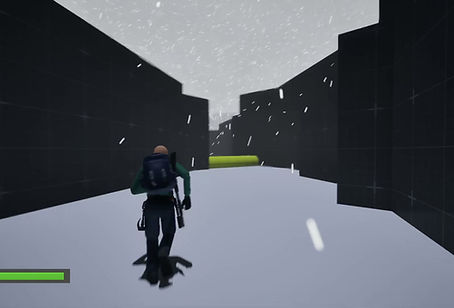
Stormbreaker is a 3D platformer game where you take control of Liv, a mischievous spirit, and use her wind skills to blast your way through a storm that threatens to destroy your world.
Your goal is to calm the storm before it drags the world into total ruin.
My goal was to design a level that delivers both challenge and engagement, while conveying the constant threat and intensity of the storm.
What I worked on
As a Game Designer
-
Supported the design and implementation of core gameplay mechanics through documentation and collaboration
-
Iterated on and maintained up-to-date Game and Level Design documentation to reflect design changes and team feedback
As a Level Designer
-
Designed and developed one of the game’s three levels, “Sea of Clouds.”
-
Balanced the level around a mid-game difficulty curve, focusing on moderate challenge and player progression
-
Scripted gameplay events using Unreal Engine Blueprints
-
Implemented dynamic environmental destruction using Chaos physics
-
Collaborated closely with a Tech Designer and Environment Artist to ensure cohesion between gameplay and visuals
My Level
StormBreaker is structured around three distinct levels, each designed to support the player’s learning curve and mastery progression:
-
The Temple introduces core mechanics through a guided, low-pressure tutorial experience
-
The Sea of Clouds builds on these foundations, encouraging players to refine their movement skills through increased challenge and complexity
-
The Eye of the Storm serves as a final test, pushing players to fully master the mechanics in a high-intensity environment
Sea of Cloud
As one of three Level Designers on the project, I was responsible for designing the “Sea of Clouds.”
I envisioned the level as a vast expanse of floating islands, where players navigate from one platform to another while constantly exposed to the looming presence of the storm.
Level Intention
-
Gradually increase the difficulty of platforming sequences to support player progression
-
Introduce cinematic moments through large-scale environmental destruction, reinforcing the storm’s intensity
-
Encourage players to combine actions and mechanics to successfully navigate more complex platforming challenges


1. Entry & Initial Hook
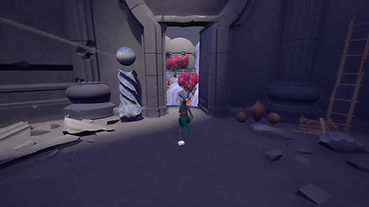
The level begins immediately after the player falls from the Temple’s final slide, creating a seamless transition into a new environment.
A large stone arch and closed door are placed directly in front of the player, acting as a strong visual landmark and objective.
Interacting with the mechanism opens the path forward and introduces the first platforming sequence.
2. Controlled Introduction to Platforming
The player is guided through a confined and readable space, allowing them to focus on core movement mechanics without distraction.
Platforming challenges remain simple and forgiving, reinforcing player confidence early in the level.
At the end of this section, lightning hazards are introduced, foreshadowing increased danger later in the level.

3. Opening Up & Escalation
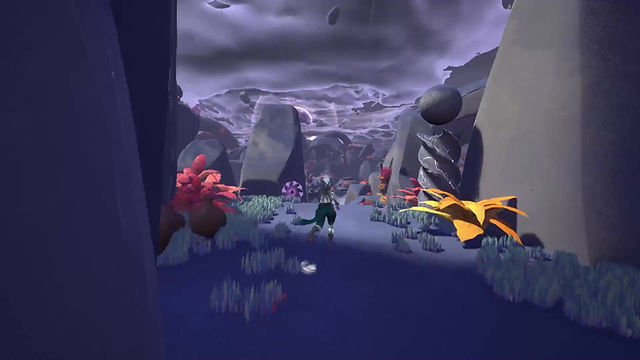
Once the initial gate is destroyed, the level opens into a large, expansive space.
The player gains a direct view of the Eye of the Storm, establishing a clear long-term goal and reinforcing spatial awareness.
Platforming sequences become more demanding, while environmental elements (falling boulders) introduce movement and instability to increase tension and immersion.
4. Environmental Pressure & Mechanics Reuse
Environmental hazards intensify:
-
Boulders are pulled into the storm in front of the player
-
Platforms begin to collapse under the player’s weight
These elements increase pressure during traversal and introduce mechanics that will be reused later in the final level (Eye of the Storm).


5. Final Sequence & Transition
The final platforming sequence culminates in a cinematic moment, where a massive rock is pulled into the storm and collides with another, destroying it.
After a series of strong wind effects, the player reaches a calm but imposing space, facing two massive statues guarding the entrance to the final area.
This acts as a visual and pacing contrast, preparing the player for the level’s conclusion.
References
We drew inspiration from Solar Ash and The Pathless for their fluid movement systems and large-scale environments.
DeadCore influenced our approach to input combinations and the design of precise platforming sequences.
Gameplay
Since the game is a platformer and the character can perform multiple action combinations, I carefully considered the metrics of each ability to design platforming sequences that feel fluid, challenging, and satisfying.
Jump
Dash
Slide
A classic jump from a height of 1.25 meters.
Dash forward from a distance of 2 meters.
Automatic sliding when the slope is inclined to a certain degree.


Wind Gust (Main Mechanics)
Shoot (ground)
A gust of wind pushing upwards has the ability to reset the Dash.
Aim and Shoot to destroy obstacles.


Shoot (air)
Same as Shoot from ground except that time slows down for a moment.

Combination
Combination of different mechanics possible.
Here's an example: Wind Gust, Dash, Wind Gust, Jump

Closing Thoughts
As our final academic project, StormBreaker was developed over eight months with ongoing feedback from instructors and industry professionals, making it both demanding and highly formative.
This was my first opportunity to fully own a level while iterating extensively based on structured feedback, which greatly improved my approach to level design and iteration.
The project ultimately strengthened my ability to design, test, and refine gameplay experiences within a collaborative production environment.