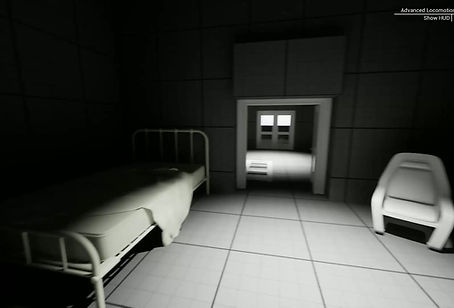
Genre: Action & Adventure
Type: Advanced Blockout
Engine: Unreal Engine 5.6
Tools: UE Blueprints, PureRef, Miro
Iterations: 8
Playtests: 7
Role: Level Designer
Description: Design of a linear level focusing on stealth, action and narrative sequences
Iterations Overview

2D Map
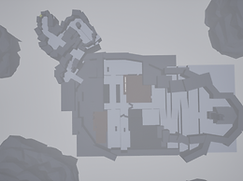
Blockout Iteration 1

Blockout Iteration 4

Blockout Iteration 6

Blockout Iteration 8
Goal & Inspiration

Blockout
Inspiration
The goal of this project was to create a action & adventure level focused on environmental storytelling, exploration, and tension pacing during a snowstorm.
I wanted to design a level where the player constantly feels isolated and vulnerable while progressively uncovering the fate of their missing wife through exploration and environmental clues.
The project was heavily inspired by the pacing and cinematic presentation of The Last of Us, the traversal mechanics of Tomb Raider, and the environmental storytelling and oppressive atmosphere of Resident Evil.
Particular attention was given to player guidance through landmarks, contrast between calm exploration and high-tension encounters, and the use of lighting and level composition to reinforce immersion.
Level Overview

The player takes control of a survivor searching for his missing wife during a violent snowstorm in an abandoned infected mountain city.
The level begins with a short tutorial sequence introducing traversal, stealth, and combat mechanics before opening into a large vista overlooking the city. From this point onward, the player must navigate through multiple interconnected locations, including a police station, city streets, and a hotel, while following environmental clues left behind by his wife.
Progression combines exploration, stealth, combat, and environmental storytelling, with the church serving as a constant visual landmark guiding the player throughout the experience.
The level culminates inside the church, where the player finally discovers the fate of his wife, bringing both the narrative and gameplay journey to an emotional conclusion.
Technique Highlights
Technique Highlights 1: Vistas & Goal Reinforcement
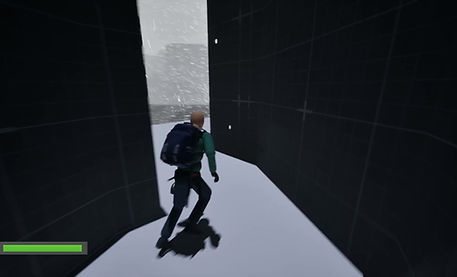


My Approach: My goal was to maintain a clear long-term objective while reinforcing immersion through environmental composition.
How i applied it: Early in the level, I used a large vista to reveal the city and establish the church as the main visual landmark. Its elevated position and distinct silhouette naturally guide the player toward the final destination.
Throughout the experience, the church is regularly reintroduced from different viewpoints to maintain orientation and reinforce progression. Later, its explosion acts as both a narrative escalation and a strong visual reminder of the player’s goal.
Technique Highlights 2: Environmental Storytelling


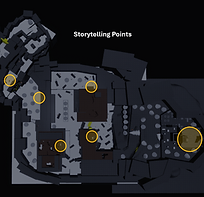
My Approach: Environmental storytelling was used to gradually reveal the fate of the player’s wife and reinforce the atmosphere of isolation throughout the level.
How i applied it: Notes, abandoned camps, destroyed spaces, and traces of previous survivors guide the player through the environment while providing narrative context without interrupting gameplay.
Each major location tells part of the story, encouraging exploration and rewarding player attention through environmental details and visual storytelling.
Technique Highlights 3: Enforce immersion


My aproach: A major focus of the level was to reinforce player immersion through atmosphere, pacing, and environmental interaction.
How i aplied it: The snowstorm, limited visibility, dark interiors, and dynamic lighting were used to create a constant feeling of tension and vulnerability.
Gameplay transitions between exploration, stealth, traversal, and combat were carefully paced to maintain engagement while supporting the cinematic survival-horror experience.
Walkthrough Beat by Beat
Beat 1: Introduction & Core mechanics

The level begins with a short tutorial sequence introducing the player to the core movement mechanics, including jumping, sprinting, and crouching.
Two infected enemies are then introduced in a controlled encounter designed to teach both basic combat and stealth takedowns in a low-pressure environment.
Beat 2: Vista & Traversal Section

After clearing an obstacle blocking the path, a recurring mechanic throughout the level, the player discovers a large vista overlooking the city and the church in the distance.
Environmental storytelling is introduced through dead infected bodies and signs of previous survivors. The sequence ends with a climbing section that teaches the player how to descend traversal walls safely.
Beat 3: Police Station Exploration

Reaching a survivor camp, the player finds a note from his wife directing him toward the police station.
Inside, the pacing shifts toward stealth and tension as the player navigates dark interiors using a flashlight while avoiding or eliminating infected enemies.
A second note reveals the next destination: the hotel.

Beat 4: Streets & Church Explosion
While exploring the snowy streets, the church suddenly explodes in the distance, reinforcing the player’s long-term objective and escalating tension.
The player then reaches the hotel parking area, where crawling infected block the path to the building.
Beat 5: Hotel Exploration
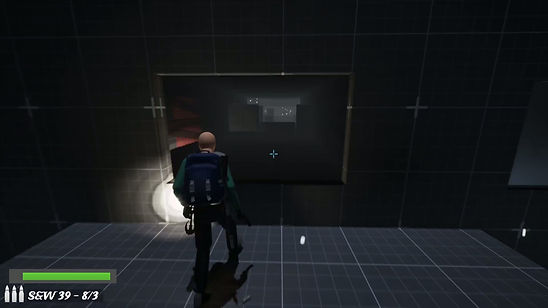
The hotel acts as a larger exploration and survival-horror space composed of three floors filled with infected enemies, loot opportunities, and environmental storytelling.
The player must carefully explore the building, manage encounters, and eventually escape by traversing toward a neighboring structure.
Beat 6: Preparation Phase
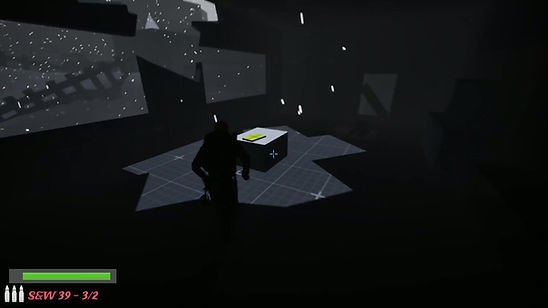
Inside the adjacent building, the player discovers another note explaining that the survivors fled toward the church.
From this location, the church becomes visible once again, reinforcing the final objective. The player can also prepare for the upcoming combat encounter by collecting weapons and ammunition left behind.
Beat 7: Final Approach

The path toward the church is partially blocked by environmental obstacles, forcing the player to use climbing mechanics to progress through the snowy ruins and reach the church entrance.
Beat 8: Church Finale

The final sequence takes place inside the church cemetery and surrounding area, where the player faces the last group of infected.
Upon entering the church, the player discovers his wife transformed into an infected, standing before the altar. After killing her, he reads her final letter before the level fades to black.
Pre-Production
During pre-production, I used a Miro board to organize the entire development process, including weekly progression tracking, gameplay references, level structure, and design intentions.
This helped me maintain a clear production pipeline while iterating on pacing, player progression, and environmental storytelling throughout the project.
Process Breakdown
Blockout 1
Have a clear view of the design with a first 3D blockout, establishig clear pacing.

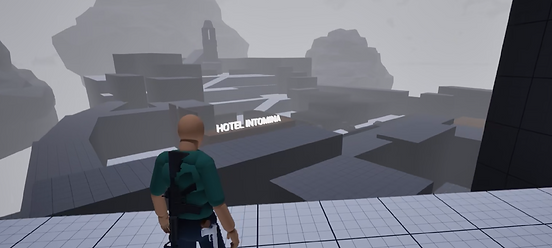
Created an initial greybox pass to translate the 2D level design into a fully playable 3D space, ensuring clarity of layout, scale, and player flow. This stage focused on establishing the overall structure and readability of the level before adding narrative or environmental detail.
Results: Clear spatial understanding of the level, validated core traversal paths, and early testing of scale and composition.
Goal: Establish the foundation of the level in 3D, ensuring strong readability and accurate translation of the intended player experience.
Implementation:
-
Built initial blockout of all main areas
-
Translated 2D layout into 3D playable space
-
Tested player flow and traversal readability
-
Defined early scale using basic geometry and placeholder assets
Playtests & Iteration 1
Iterated with feedbacks from 3 players and 2 experienced game & level designers.
Problem: Playtests revealed pacing issues across the mid-section of the level. The transition between the forest and the police station felt too slow, and the street traversal toward the hotel lacked engagement. Additionally, feedback indicated that the hotel would benefit from increased verticality and additional floors to enrich exploration and gameplay variety.
Results: Improved pacing and player engagement through structural adjustments. The hotel gained additional vertical layers, increasing its depth and exploration value, while traversal segments were reworked to reduce downtime and maintain tension between key locations.
Blockout 4
Iterated the design based on the feedbacks received during the playtest sessions


Major structural updates were made to the police station and hotel, including additional walls, floors, and spatial definition. A new traversal building was also added to support the jump sequence between areas. The church area remained unchanged during this iteration.
Result: Improve early-game onboarding, reinforce critical path readability, and increase structural clarity and depth in mid-to-late game spaces while enhancing overall flow between major locations.
Implementation:
-
Refined tutorial encounter with two infected to improve learning curve
-
Improved pathing and visual guidance toward the main vista
-
Adjusted descent route toward the forest for clearer traversal flow
-
Added structural detail (walls, floors) to police station and hotel blockouts
-
Introduced new traversal building to support inter-area jump sequence
-
Maintained church layout unchanged to preserve final pacing and reveal structure
Playtests & Iteration 4
Iterated with feedbacks from 3 players and 2 experienced game & level designers
Problem: The descent felt unnatural, traversal between key areas (forest, police station, hotel) was still too long, the police station lacked life, the jump between buildings felt slightly too far, and the final church fight was too chaotic and hard to read.
Results: Improved overall pacing and flow between areas, increased clarity in traversal routes, adjusted jump distance for better readability, and started refining the church combat space to reduce visual clutter and improve encounter readability.
Blockout 6
Iterated the design based on the feedbacks received during the playtest sessions


The path after the viewpoint was too obvious, which reduced player engagement with the vista. Additional issues included incorrect zombie placement, collision problems with barriers, and an incomplete puzzle setup in the armory.
Results: Improved overall character behavior through bug fixes and blueprint adjustments. The note system was successfully implemented, and core level functionality continued to progress, though encounter placement and interaction systems still required refinement.
Implementation:
-
Fixed multiple character-related bugs
-
Adjusted character blueprint to better align with intended gameplay vision
-
Implemented the note system for environmental storytelling
-
Identified and prepared fixes for zombie placement issues
-
Worked on barrier collision corrections
-
Started initial setup adjustments for the armory puzzle
-
Reviewed player pathing after vista to reduce over-obvious navigation cues
Playtests & Iteration 6
Iterated with feedbacks from 3 players and 2 experienced game & level designers
Problem: The hotel lacked proper flow, enemy placement, verticality, and lighting balance. The church had a rigid path and poorly balanced combat (enemies + cover). The police station suffered from pacing and lighting issues. The vista was unclear, and the descent into the forest felt unnatural.
Results: Improved overall flow, encounter readability, and pacing across key areas, with better navigation clarity and more coherent spatial transitions between locations.
Blockout 8
Iterated the design based on the feedbacks received during the playtest sessions
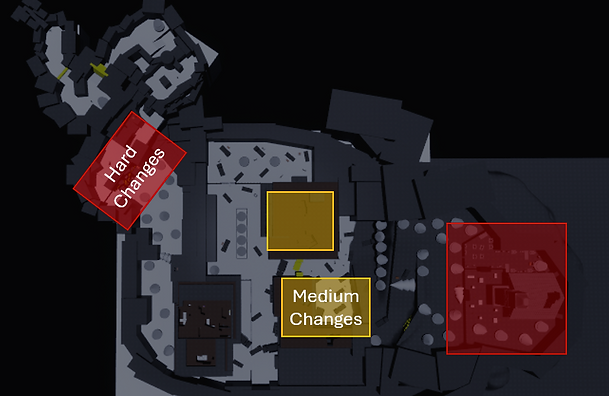

Playtests revealed readability and pacing issues, especially in the hotel where players felt confused about navigation and progression. Some areas lacked visual clarity and did not fully support the intended atmosphere or narrative tone.
Results: Improved overall readability and flow, with clearer player guidance and more consistent pacing. Environmental storytelling was strengthened, creating better contrast between areas and a more immersive experience across the level.
Implementation:
-
Refined layouts in confusing areas, especially the hotel
-
Improved visual guidance using lighting and environmental props
-
Increased contrast between spaces to reinforce navigation clarity
-
Strengthened environmental storytelling to support narrative tone
-
Identified sound design and environmental feedback as future improvement areas
Playtests & Iteration 8
Iterated with feedbacks from 3 players and 2 experienced game & level designers
Problem: Players were able to bypass intended boundaries due to insufficient wall height, and the downward-sloping climbing section lacked engagement. Additional issues included incorrect lighting balance, too many enemies, and insufficient ammunition for the player. Similar balancing problems appeared in multiple areas, with enemy density and resource scarcity impacting pacing. The final section also suffered from weak environmental layout, poor enemy placement, and overall level
readability issues.
Results: Improved traversal constraints, adjusted combat balance through enemy and resource tuning, and enhanced overall encounter readability. Iterations helped reinforce intended pathing, stabilize difficulty, and improve clarity of the final level layout and engagements.
Other Game Projects


Genre: 3D Platformer
Type: Game (~30 minutes experience)
Engine: Unreal Engine 5.3
Tools: UE Blueprints, Chaos, Jira, Perforce, Figma, PureRef
Iterations: 5
Playtests: 10+
Role: Game & Level Designer
Team: 3 Level Designers, 2 Technical Designers, 1 UX Designer, 4 Artists
Description: Design one of the three level and creation of set pieces on a 3D platformer game